Author name: Muhammad Zohaib Sardar

Download YouTube Videos to SD Card on Android (Direct Storage Guide)
Blog

How to Download YouTube Videos to SD Card Directly on Android

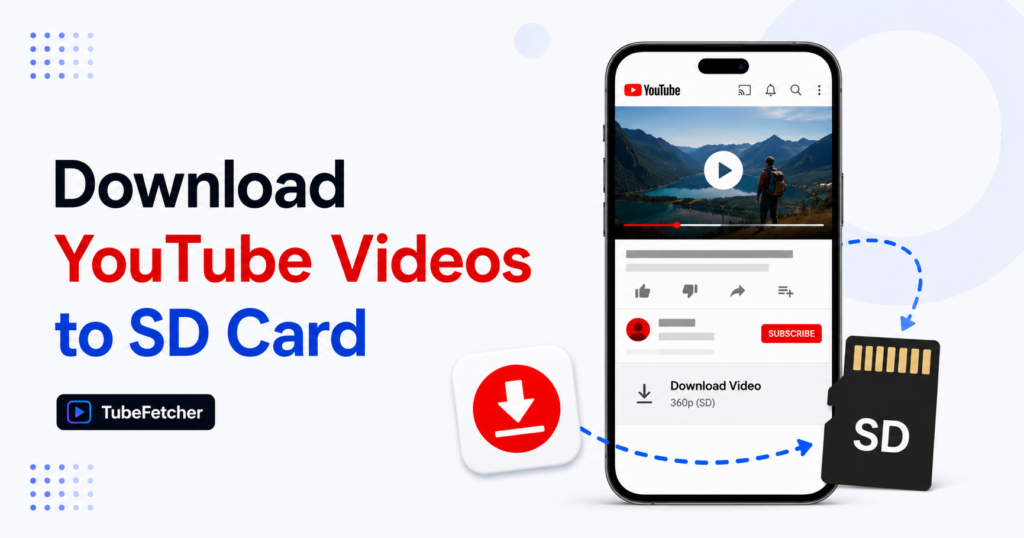
YouTube videos save to Android SD card through three routes: a downloader app configured with Storage Access Framework (SAF) permission for the SD card folder, a two-step download-then-move workflow through the Files app, or a manufacturer-specific setting on Samsung, Xiaomi, or Oppo devices that redirects the default Downloads folder to external storage.  Android 11 and later restrict direct-to-SD-card writes for most apps unless the user grants explicit SAF permission. TubeFetcher on Android handles the SD card workflow through its settings panel by requesting the SAF permission for the target SD card folder, which delivers downloads directly to external storage without the intermediate move step.  This guide covers the working SD card workflows across Android 10, 11, 12, 13, 14, and 15. Why Android SD card downloads require extra setup Android 10 introduced scoped storage, and Android 11 tightened the restriction further. The change removed direct file-system access for third-party apps and forced apps to use the Storage Access Framework (SAF) for external storage writes. Three structural facts define the Android SD card download landscape: The combination means direct-to-SD-card YouTube downloads require the app to request SAF permission the first time the user changes the download destination, then remember that permission for future downloads. Method 1: Save YouTube videos to SD card through TubeFetcher TubeFetcher on Android downloads YouTube videos directly to the SD card when the user grants SAF permission for the target folder. The Universal APK runs on every Android device and architecture from Android 7 onward, and the SD card workflow requires a one-time permission grant. The five-step SD card setup: The workflow bypasses the internal-storage-then-move step that other Android downloaders require. Videos land on the SD card at download completion, ready for playback in Gallery, VLC, or any Android video player. Download TubeFetcher for Android, Universal APK for all devices and architectures. For the same YouTube download workflow on other operating systems, download links for Mac, Windows, and Linux appear in the best free YouTube downloader comparison. Method 2: Two-step download-then-move to SD card The two-step workflow downloads YouTube videos to internal storage first, then moves the file to the SD card through the Files app. The route suits users who prefer not to grant SAF permission or whose Android version does not support the direct-to-SD-card path. The four-step two-step workflow: The two-step workflow doubles the storage usage temporarily since the video exists on internal storage until the move completes. On devices with limited internal storage, this workaround fails for large downloads that exceed available internal space. Method 3: Manufacturer-specific SD card default settings Samsung, Xiaomi, and Oppo devices sometimes include a system setting that redirects the default Downloads folder to the SD card. When enabled, every app that saves to Downloads writes to the SD card instead of internal storage. The Samsung One UI setting path: The Xiaomi MIUI setting path: The setting affects every app that saves to the shared Downloads folder, so downloads from Chrome, WhatsApp, and other apps also redirect to the SD card. Users wanting per-app control skip this method in favor of Method 1. How to verify the download reached the SD card Successful SD card downloads appear in three places on Android: If the downloaded video appears in internal storage instead of the SD card, the SAF permission likely did not grant successfully. Reopening TubeFetcher settings, tapping Save location, and reselecting the SD card folder re-triggers the SAF prompt. SD card compatibility across Android versions Android SD card behavior differs by version, and the differences affect which workflow applies to a specific device. Android version Direct-to-SD-card SAF required Move-to-SD-card Android 9 Yes (with file permission) No Yes Android 10 Partial (scoped storage) Sometimes Yes Android 11 Only through SAF Yes Yes Android 12 Only through SAF Yes Yes Android 13 Only through SAF Yes Yes Android 14 Only through SAF Yes Yes Android 15 Only through SAF Yes Yes For every Android version from 11 onward, SAF permission is the only route to direct-to-SD-card YouTube downloads. Method 1 covers this workflow through TubeFetcher’s SAF integration. Storage math: how many YouTube videos fit on an SD card SD card capacity decides how many YouTube videos the user stores before running out of space. The file size varies by resolution, and the numbers below assume standard H.264 encoding. The storage per hour of YouTube video breaks down as follows: SD card size 720p videos (hours) 1080p videos (hours) 4K videos (hours) 32 GB 40 hours 20 hours 5 hours 64 GB 80 hours 40 hours 10 hours 128 GB 160 hours 80 hours 20 hours 256 GB 320 hours 160 hours 40 hours 512 GB 640 hours 320 hours 80 hours A 128GB SD card holds 80 hours of 1080p YouTube content, which suits users building offline libraries for travel, low-connectivity regions, or classroom playback. The 256GB and 512GB tiers suit long-form content collectors, gaming stream archivists, and users saving full YouTube playlists across dozens of hours. Why SD card storage matters for Android YouTube downloaders Three specific Android use cases benefit most from SD card downloads. The three use cases: Budget Android devices with limited internal storage Android phones sold in emerging markets often ship with 32GB, 64GB, or 128GB of internal storage. Users of these devices exhaust internal storage quickly with app installations, photos, and downloaded YouTube content. SD card downloads route large files off the internal storage where the operating system needs headroom for updates and cache. Travelers building offline video libraries Long-haul flights, low-connectivity regions, and multi-week trips through areas with expensive mobile data drive Android users to preload YouTube content on SD cards. A 256GB SD card carries hundreds of hours of downloaded YouTube videos independent of internal storage capacity. Students saving lecture videos and educational content University students on shared or entry-level Android devices save lecture recordings, tutorial series, and study materials on SD cards. The workflow keeps educational content separate from personal photos and social media, and SD card removal transfers the entire content

YouTube Download Button Not Working (Chrome, Safari, Firefox, Mobile Fix)
Blog

YouTube Download Button Not Showing or Not Working: How to Fix It on Chrome, Safari, Firefox, and Mobile

The YouTube download button fails for four specific reasons: browser extension removal from Chrome Web Store, Safari’s blanket restriction on YouTube downloaders, mobile YouTube app’s Premium-only Save function, and Firefox extensions requiring reconfiguration after YouTube API updates. Each cause requires a different fix. The most reliable long-term solution routes around the button problem entirely; a desktop downloader app on Mac, Windows, Linux, or Android eliminates the browser-button dependency and works consistently across every YouTube URL.  This guide covers each cause, the specific fix that applies, and the workflow that survives browser policy changes. Download only content you have rights or permission to save; for the full position, see our guide on whether downloading videos is legal. Why the YouTube download button stops working The “download button” refers to different things depending on the source. Three separate mechanisms show as “download buttons” for YouTube content, and each fails for different reasons. Three sources produce the download button experience: Each source fails through different mechanisms. Diagnosing the correct cause requires identifying which of the three the user is trying to use. Cause 1: Chrome removed the download button extension Chrome Web Store policy explicitly prohibits extensions that facilitate YouTube video downloading. Google enforces this policy through automated removal of extensions that violate the rule, which affects Chrome, Edge, and Brave users installing YouTube downloader extensions. Three specific patterns account for most Chrome extension button failures: The fix for Chrome extension button failure requires either switching to Firefox (where the extension category remains available), reinstalling the extension from the developer’s website outside Chrome Web Store, or moving off browser extensions to a desktop downloader. Cause 2: Safari does not support YouTube download extensions Safari’s extension model does not permit YouTube downloader functionality. Apple’s App Store review process rejects Safari extensions that facilitate YouTube video downloading, which means no legitimate Safari extension provides the download button that Chrome and Firefox users install. Three practical consequences of Safari’s policy: Safari users need a route that does not depend on browser extensions. The desktop app path handles this cleanly because the download happens outside the browser entirely. Cause 3: YouTube app Save button requires Premium The Save button in the YouTube mobile app on iPhone and Android downloads videos for offline playback inside the YouTube app. The button only appears for YouTube Premium subscribers, and the downloaded file stays locked inside the YouTube app in encrypted format. Three facts define the YouTube app Save button: For users wanting an actual MP4 file in phone Gallery or Camera Roll rather than in-app offline viewing, the YouTube app Save button is the wrong tool. The iPhone Camera Roll guide and the Shorts to gallery guide cover the workflows that produce portable files. Cause 4: Firefox extensions break after YouTube API updates Firefox permits YouTube download extensions where Chrome and Safari do not, but the extensions break periodically when YouTube updates its stream URL structure. Video DownloadHelper, YouTube DownloadHelper, and similar Firefox extensions require frequent developer updates to keep pace. Three signs of a broken Firefox extension: The fix for Firefox extension issues requires updating to the latest extension version, reinstalling if updates fail to apply, or switching to a desktop tool that does not depend on the browser layer. The desktop app solution that eliminates browser button dependency Every browser-button failure shares one root cause: dependency on the browser as the download layer. Chrome policy, Safari restrictions, and Firefox API drift all break at the browser level. A desktop downloader runs outside the browser and handles YouTube through direct URL processing, which removes the browser-button dependency entirely. TubeFetcher covers Mac, Windows, Linux, and Android with the same four-step workflow that survives browser changes: Download TubeFetcher for the operating system running the workflow: The desktop app approach solves every cause listed above. Chrome extension removal does not affect it. Safari’s restriction does not apply. Mobile app Save button limitations do not apply. Firefox API drift does not affect it. 100,000+ users in 30+ countries run TubeFetcher today across the four supported operating systems. For first-run setup on any operating system, the TubeFetcher how-to guide covers installation. Cross-cause fix comparison The four causes match to different fixes based on which button the user is trying to restore. Cause Symptom Fix Chrome extension removed Button disappeared after Chrome update Switch browser or use desktop app Safari does not support No button ever appears in Safari Desktop app or web converter Mobile YouTube Save button greyed Save option not available Requires Premium, or use desktop app Firefox extension broken Button clicks fail or download partial Update extension or use desktop app Every row in the table lists “desktop app” as the reliable option. This reflects the architectural reality that browser-level dependencies produce failure points that a standalone tool avoids. Why browser-based YouTube downloading keeps breaking Three structural forces drive the ongoing browser-button reliability problem, which explains why the same “button doesn’t work” issue recurs every few months. The three forces: These forces do not affect desktop apps because desktop apps run outside the browser-and-app-store ecosystem where the policies apply. The architectural difference makes desktop tools more durable for users who download YouTube content regularly. The reliable fix routes around the button problem entirely The YouTube download button fails for browser-policy reasons that no user configuration change fully solves. Chrome’s policy against download extensions, Safari’s blanket restriction, mobile YouTube’s Premium-gated Save option, and Firefox’s API-drift issues each represent structural problems at the platform level rather than user-fixable bugs. The desktop app approach sidesteps every one of these causes by running the download outside the browser. Paste a YouTube URL into TubeFetcher on Mac, Windows, Linux, or Android, and the video downloads without depending on a browser extension, without requiring Premium, and without breaking when YouTube updates its stream URLs. For users who download YouTube videos regularly, the architectural fix outperforms every temporary browser-based patch. The button that always works is the one that does not depend on the browser at all. Related

Save YouTube Channel Membership Videos for Offline Viewing
Blog

How to Save Your YouTube Channel Membership Videos for Offline Viewing

YouTube channel membership videos save for offline viewing through browser-session authentication that recognizes the active membership. Active members access Members-Only content through their signed-in YouTube account, and desktop downloaders read the same browser session to download videos the member already has rights to view. YouTube Premium’s offline feature does not cover Members-Only content on desktop, and the mobile app’s offline save stays inside the YouTube app. TubeFetcher handles the workflow across Mac, Windows, Linux, and Android for members who want portable MP4 files of the membership content they support. This guide covers the workflow for active members, what to do if a membership lapses, and the specific settings that make the download work. What YouTube channel memberships include YouTube channel memberships are paid subscriptions that support individual creators directly. Members pay a monthly fee ranging from $0.99 to $99.99 depending on the creator’s tier structure, and in return receive access to member-only videos, custom emoji, badges, live chat perks, and community posts. Three membership content types affect the download workflow: The download workflow applies to Members-Only videos where the account holds active membership at the required tier. Members-First videos work through the standard YouTube download flow once the public release date passes. Method 1: Save Members-Only videos through TubeFetcher TubeFetcher downloads YouTube channel membership videos on Mac, Windows, Linux, and Android through cookie-based browser session authentication. The app reads the same signed-in state the browser uses to verify membership access, which means the download works only for accounts with active membership at the required tier. The four-step download workflow: The cookie-based authentication approach means the same browser session that shows the video in the player also authorizes the download. Signing out of YouTube in the browser removes the download authorization, since the member session no longer exists. Download TubeFetcher for the operating system running the workflow: 100,000+ users in 30+ countries run TubeFetcher today. For first-run setup on any operating system, the TubeFetcher how-to guide covers installation across all four builds. Why YouTube Premium doesn’t cover Members-Only downloads YouTube Premium’s offline feature saves videos inside the YouTube mobile app for offline playback, but the feature has specific limitations that affect membership content. Three practical Premium limitations: For members who want portable MP4 files that survive cancellation of either subscription, Premium is the wrong tool. A desktop downloader produces the standard file format that plays in any video player. Why members save Members-Only content Active channel members save Members-Only videos for four practical reasons that map to legitimate offline use cases. The four member use cases: Offline viewing during travel or low connectivity Members preparing for flights, commutes through no-signal areas, or trips through low-connectivity regions build offline libraries of the membership content they support. The MP4 file plays in any video player without requiring the YouTube app or an active internet connection. Backup of content the creator may remove Creators sometimes delete Members-Only videos, migrate to different platforms, or restructure their tier offerings. Members who supported the creator during the original upload preserve their access to content they legitimately viewed by saving it locally before removal. Cross-device viewing without YouTube app dependency Members using screens or devices without the YouTube app, smart TVs with limited YouTube support, tablets with restricted app installations, older devices, play saved MP4 files through native video players. The local file avoids the YouTube app entirely. Preserving access after cancelling membership Members who cancel their subscription lose access to Members-Only content they previously viewed during their active membership. Saving locally during active membership preserves the content the member paid to access during the subscription period. What happens if the membership lapses Active membership drives the download workflow. Once membership ends, three specific things change: Members considering cancellation who want to preserve access to specific videos benefit from saving those videos while the membership remains active. After cancellation, the download workflow requires re-subscribing. Save Members-Only content across four operating systems TubeFetcher’s cookie-based authentication approach works identically across Mac, Windows, Linux, and Android because each build reads the browser session from the operating system’s browser installation. The cross-OS workflow characteristics: Operating system Browser session source Download destination Mac Chrome, Firefox, Edge on macOS ~/Downloads or custom path Windows Chrome, Firefox, Edge on Windows C:\Users[username]\Downloads Linux Chrome, Firefox on Linux ~/Downloads Android Chrome mobile session /storage/emulated/0/Download/ The consistency means a member switching between devices, a Mac at home, a Windows PC at work, an Android phone for travel, runs the same workflow on each operating system. The downloaded MP4 transfers between devices through AirDrop, cloud sync, or USB. When Members-Only downloads fail Three specific failure modes affect the workflow, each with a specific fix. The three failure patterns: Each failure mode resolves through the same principle: the download works when the browser session confirms active membership at the required tier for the specific video. The workflow that preserves membership access matters most The Members-Only download workflow rewards preparation. Active members who anticipate travel, connectivity gaps, or eventual cancellation save the videos they most want to preserve while the membership remains active. The saved MP4 files play indefinitely on local disk, transfer between devices freely, and survive subscription changes without requiring the YouTube app. For members who want portable files of the membership content they support, the cookie-based authentication approach through a desktop downloader delivers the practical result the YouTube app’s offline feature does not, a standard MP4 file the member owns locally, produced through the same browser session that verifies their active membership access. Related YouTube download guides For deep-dives on YouTube download workflows across specific access states and devices:

Save YouTube live streams during broadcast and live replays after the event. Real-time capture, VOD downloads, and the tools that fit each workflow.
Blog

How to Download YouTube Live Streams and Live Replays (Complete Guide)

YouTube live stream downloading splits into two distinct workflows: real-time capture during an active broadcast, and standard VOD download after the live stream ends. Real-time capture requires command-line tools like yt-dlp or streamlink that handle HLS m3u8 segmented streams. Live replays convert to standard YouTube VOD URLs after the broadcast ends, which every YouTube downloader handles through the normal paste-and-download flow.  This guide covers both workflows, the tools that fit each, and the timing that decides which approach applies. Download only content you have rights or permission to save; for the full position, see our guide on whether downloading videos is legal. What YouTube live streams actually are (and why timing matters) YouTube live streams broadcast in real time through HLS adaptive streaming, then convert to standard VOD after the stream ends. The technical difference between “live” and “replay” affects which tools work and which workflows apply. Three structural facts define the YouTube live download landscape: Timing decides the workflow. Downloading during the live broadcast requires real-time HLS capture tools. Downloading after the broadcast ends works through any standard YouTube downloader. Method 1: Download a YouTube live replay after the broadcast ends Live replays download through the same tools that handle standard YouTube videos, because YouTube converts the completed live stream into a normal VOD within roughly one hour of the broadcast ending. TubeFetcher handles this workflow across Mac, Windows, Linux, and Android through the four-step paste-and-download flow. The four-step live replay workflow: Download TubeFetcher for each operating system: The live replay workflow works reliably because YouTube treats post-broadcast content as standard VOD. Long-form live replays, multi-hour church services, gaming streams, esports events, product launches, download at source quality through the same interface as any other YouTube video.  100,000+ users in 30+ countries run TubeFetcher today. For first-run setup on any operating system, the TubeFetcher how-to guide covers installation across all four builds. Method 2: Capture a YouTube live stream during active broadcast Real-time live stream capture during active broadcast requires HLS-aware tools that reassemble m3u8 segments as they generate. yt-dlp and streamlink handle this workflow through Terminal on Mac, Windows, and Linux. Install yt-dlp on Mac through Homebrew: brew install yt-dlp ffmpeg Capture a live stream during broadcast: yt-dlp –live-from-start “LIVE_STREAM_URL” The –live-from-start flag tells yt-dlp to begin recording from the earliest available segment rather than the current live edge. This captures the full stream from the beginning of DVR window even if the download starts after the broadcast began. Capture without waiting for the stream to end: yt-dlp –wait-for-video 30 –live-from-start “LIVE_STREAM_URL” The –wait-for-video 30 flag polls every 30 seconds for the stream to start, then begins recording. This suits scheduled broadcasts where the exact start time is unknown. For real-time capture during broadcast, the Terminal route is the reliable path. GUI tools generally handle post-broadcast VOD but do not attempt live capture. Method 3: Screen recording as a fallback for restricted streams Some YouTube live streams do not allow standard downloading because of DRM, member-only access, or region restrictions. Screen recording captures the visible playback as a fallback, at the cost of real-time recording duration and cursor artifacts. The macOS screen recording process: The Windows Game Bar workflow: Screen recording matches the visible playback quality rather than source stream quality, which typically means 1080p at 30fps rather than the higher-quality source. The workflow suits users with no other option for a specific stream. Which live stream download method fits which scenario Match the method to the timing and access level of the specific stream. Scenario Method Tool Quality Live replay (broadcast ended) Method 1 TubeFetcher Source MP4 Live during broadcast, public Method 2 yt-dlp Source HLS DVR-window recovery Method 2 yt-dlp –live-from-start Source HLS Restricted or member-only Method 3 Screen recording Player quality For most users, church congregations saving Sunday service replays, esports fans archiving tournament VODs, gamers saving speedrun world records after streams end, Method 1 covers the workflow. Real-time capture applies only when the download timing overlaps with the active broadcast. Why some YouTube live streams stop existing after the broadcast ends YouTube live streams sometimes disappear after the broadcast ends because the broadcaster deletes the stream, sets it to private, or the stream failed YouTube’s automated content-ID checks during broadcast. Three specific reasons account for most disappearances: For streams the user genuinely wants to preserve, downloading during broadcast or immediately after ending, before takedowns process, is the reliable approach. Long-form live stream considerations Multi-hour YouTube live streams, full-day conferences, extended gaming marathons, worship services, esports events, require additional planning that shorter downloads skip. Three practical factors for long-form live downloads: For long-form content where real-time capture is not essential, the post-broadcast workflow is the more reliable choice. Related YouTube download guides For deep-dives on YouTube download workflows across content types and access states: The right download timing depends on stream status The single most important decision for YouTube live stream downloading is the timing. Post-broadcast VOD download through TubeFetcher covers 90% of real-world use cases, church services saved for shut-in members, esports events archived by fans, gaming streams collected by content creators, product launches preserved for research. Real-time capture through yt-dlp applies to the 10% of cases where the user cannot wait for broadcast to end, content likely to disappear, streams the user wants preserved from the earliest segment, or broadcasts under active Content ID scrutiny where post-broadcast takedown is likely. Screen recording sits as the last-resort fallback for streams that resist both standard download methods. For every other case, matching the tool to the timing produces the reliable result.

Download YouTube Shorts to phone gallery
Blog

How to Download YouTube Shorts to Phone Gallery on Android and iPhone

YouTube Shorts save to phone gallery through three routes: a desktop downloader that transfers the MP4 to phone through cloud sync or AirDrop, a mobile browser workflow that downloads through supported converter sites, or the YouTube app’s built-in Save option that adds a YouTube watermark to the file. The vertical 9:16 aspect ratio, the /shorts/ URL structure, and the mobile-first nature of the content type each create specific friction that separates Shorts downloads from standard YouTube video downloads.  This guide covers the working Android Gallery and iPhone Camera Roll workflows, the watermark issue with YouTube’s own save button, and how the cross-device approach handles Shorts on both operating systems. Why YouTube Shorts downloading is different from standard YouTube videos YouTube Shorts uses a different URL structure and file format than standard YouTube videos, which affects every download workflow. The /shorts/ URL path serves vertical 9:16 content optimized for mobile screens, and the YouTube app treats Shorts as a distinct content type with different save behavior. Three structural facts define the Shorts download landscape: The combination means Shorts downloads reward tools that handle the /shorts/ URL structure natively and preserve the vertical aspect ratio without watermarking. Method 1: Save YouTube Shorts to Android Gallery through TubeFetcher TubeFetcher’s Android APK downloads YouTube Shorts as clean 9:16 MP4 files directly to Android Gallery. The Universal APK runs on every Android device and architecture, and the four-step download flow works identically for Shorts as for standard YouTube videos. The four-step Android Gallery workflow: Android Gallery indexes video files from /storage/emulated/0/Download/ by default, so downloaded Shorts appear alongside phone-captured videos in the Videos album. The MP4 file plays in any Android video player, imports into CapCut, InShot, or VN Editor for reposting, and transfers to other devices through Bluetooth, USB, or cloud sync. Download TubeFetcher for Android, Universal APK for all devices and architectures. Method 2: Save YouTube Shorts to iPhone Camera Roll iPhone Camera Roll saves work through desktop-to-iPhone transfer or through iOS third-party apps that support the standard Photos share sheet. iOS restricts direct YouTube-to-Camera-Roll downloads through Safari and Chrome, so the workflow requires an intermediate step. The five-step iPhone Camera Roll workflow through desktop: Download TubeFetcher for the device that handles the initial Short download: For iPhone-only users without a Mac or PC, the iPhone Camera Roll download guide covers the Documents-by-Readdle browser workflow and iOS Shortcuts automation as alternatives. Method 3: YouTube’s built-in Save button (adds watermark) The YouTube mobile app includes a Save option for individual Shorts, accessible through the three-dot menu on the video. The button saves the Short to the phone gallery on Android or Camera Roll on iPhone, but the file includes a YouTube watermark burned into the video pixels. The three-step YouTube Save workflow: Use YouTube’s Save button when the watermark is acceptable, personal viewing, sharing to friends who know the source, or archiving without repurposing plans. Skip this route when the file needs to be clean for editing, reposting to TikTok, or importing into a professional video editor. Watermark comparison across Shorts download methods The watermark behavior splits cleanly by method, which decides which approach fits repurposing versus casual viewing. Method Watermark Aspect ratio Direct-to-gallery Cross-device TubeFetcher on Android None 9:16 vertical Yes Native TubeFetcher on Mac + iPhone transfer None 9:16 vertical After transfer Mac → iPhone YouTube’s Save button YouTube logo overlay 9:16 vertical Yes No transfer needed Browser converter sites Inconsistent Varies Sometimes Manual save For Shorts creators repurposing content across platforms, TubeFetcher’s clean MP4 output preserves the ability to edit, crop, and repost without the YouTube watermark blocking cross-platform reach. Five Shorts workflows that benefit from clean gallery saves Match the workflow to what happens to the downloaded Short after it lands in Gallery or Camera Roll. Cross-platform reposting to TikTok and Instagram Reels Creators repurposing YouTube Shorts to TikTok and Instagram Reels need clean 9:16 files without the YouTube watermark. Watermarked reposts get demoted by TikTok’s algorithm and flagged by Instagram’s recommendation system as cross-posted content. Clean MP4s from TubeFetcher import into CapCut, InShot, and native TikTok editor without visible source branding. Archiving Shorts before they get deleted YouTube Shorts creators sometimes delete videos that underperform, get demonetized, or violate updated guidelines. Downloading a Short at publish time preserves the file regardless of the creator’s later removal decision. The MP4 in Gallery or Camera Roll survives channel deletions, private-mode changes, and platform-wide takedowns. Building offline Shorts collections for research Marketers analyzing competitor Shorts strategy, trend researchers tracking viral formats, and content strategists building reference libraries save Shorts for offline review. Local files enable frame-by-frame analysis, tempo detection, and hook-structure study without depending on YouTube’s playback stability. Educational Shorts for classroom playback Teachers saving educational Shorts for classroom use build offline libraries that play without YouTube’s autoplay-next-video interruption. The MP4 imports into presentation software, plays on classroom projectors, and survives school network restrictions on YouTube access. Muted background video for Instagram Stories and status updates Users repurposing Shorts as muted background video for Instagram Stories, WhatsApp Status, or Snapchat need clean vertical files without watermarks. The 9:16 ratio matches every mobile Story format natively, so downloaded Shorts drop into Stories without crop adjustment. Why the YouTube app’s Save button adds a watermark YouTube adds a watermark to Shorts saved through the mobile app to promote YouTube branding when the content appears on other platforms. The watermark is a deliberate platform-attribution mechanism, similar to TikTok’s own watermark on downloaded TikTok videos. The three practical implications: For users repurposing Shorts on other platforms, the third-party download route is the only path to watermark-free files. Related YouTube download guides For deep-dives on YouTube download workflows across mobile devices and content types: The fastest Shorts-to-gallery workflow depends on device Android users complete the entire workflow inside TubeFetcher for Android, paste the Shorts URL, tap download, the file appears in Gallery in under 30 seconds. iPhone users add the transfer step through AirDrop from Mac or cloud sync, which extends the workflow to two or

Download YouTube Videos to iPhone Camera Roll Without Premium
Blog

How to Download YouTube Videos to iPhone Camera Roll Without Premium

YouTube videos save to iPhone Camera Roll through three routes: the Files app method (download the MP4 to Files, then Save to Photos), a third-party downloader app that supports Photos export, or a shortcut-based workflow using iOS Shortcuts.  YouTube Premium’s offline feature does not save videos to Camera Roll, Premium downloads stay locked inside the YouTube app in an encrypted format that Photos, Files, and video editors cannot access.  This guide covers the working iPhone workflows, the exact steps for each, and why Premium is the wrong tool for users who want an actual MP4 in Camera Roll.  Download only content you have rights or permission to save, for the full position, see our guide on whether downloading videos is legal. Why YouTube Premium does not save videos to iPhone Camera Roll YouTube Premium’s offline download feature saves videos inside the YouTube app, not to Camera Roll. The saved file is an encrypted cache, not a portable MP4, and it plays only inside the YouTube app while the Premium subscription remains active. Three structural facts define the Premium limitation on iPhone: The combination means Premium serves one workflow only: watching offline inside the YouTube app. For a real MP4 file in Camera Roll, one that plays in Photos, imports into iMovie, or transfers to a Mac, Premium is the wrong tool. The methods below cover the working routes. Method 1: Save YouTube videos to iPhone Camera Roll through the Files app The Files app method downloads the YouTube video to iPhone storage first, then moves the file to Photos through the standard share sheet. The workflow requires a third-party YouTube downloader that saves to Files. The five-step Files app workflow: For users downloading directly on iPhone through a browser-based tool, the workflow simplifies to three steps: download the MP4 to Files, share to Photos, verify in Camera Roll. The trade-off is that Safari and Chrome on iOS restrict most YouTube converter sites through aggressive ad-blocking and download policies. Download TubeFetcher for the device that captures the initial download: The Mac-to-iPhone AirDrop route is the fastest workflow for iPhone users who own a Mac. Download the video on Mac through TubeFetcher, AirDrop to iPhone, tap the received file, and Save to Photos. Method 2: Third-party downloader apps with Photos export Some third-party apps on the App Store include direct-to-Photos export for downloaded videos. Documents by Readdle and Total Files support this workflow through their built-in browsers. The three-step Documents by Readdle process: Documents by Readdle handles the intermediate download step that iOS restricts in Safari and Chrome. The file lands in the app’s internal storage first, then transfers to Photos through the standard iOS share sheet. Total Files works through the same pattern. Both apps require the user to find a working YouTube converter site independently, the apps do not include YouTube extraction. Reliability of converter sites shifts as YouTube updates its API, which affects this workflow more than direct desktop apps. Method 3: iOS Shortcuts for YouTube-to-Camera-Roll automation Apple Shortcuts supports YouTube download automation through community-built shortcuts. The most reliable options run a video URL through a third-party API, download the MP4, and save directly to Photos. The Shortcuts workflow: Shortcuts break more often than desktop apps because the underlying converter APIs change. A shortcut that works this month may fail next month when YouTube updates its stream structure. The workflow suits users comfortable troubleshooting failed shortcuts. For a reliable long-term route, the Files app method with TubeFetcher as the source downloader delivers the same result without the automation dependency. Which iPhone Camera Roll download method fits which user Match the method to what the download workflow looks like day-to-day. Method Setup complexity Reliability Direct-to-iPhone File quality Files app + TubeFetcher on Mac Low High Requires transfer step Source quality MP4 Documents by Readdle browser Medium Medium Yes Depends on converter site iOS Shortcuts automation High Low Yes Depends on API status YouTube Premium N/A N/A Never reaches Camera Roll Not applicable For iPhone users who own a Mac, the Files app method with TubeFetcher on Mac delivers the highest reliability and source-quality output. For iPhone-only users, Documents by Readdle balances setup complexity against convenience. Shortcuts suit power users comfortable with the maintenance cost. Why third-party YouTube apps disappear from the App Store YouTube download apps face App Store removal at intervals because Apple’s guidelines restrict apps that circumvent platform terms of service. Apps that download YouTube videos directly appear briefly, gain popularity, and get removed within weeks or months. The three practical implications: The pattern makes desktop-first workflows more durable than iPhone-native app dependencies. Downloading on Mac, Windows, Linux, or Android and transferring to iPhone through AirDrop, cloud sync, or USB avoids the App Store instability. How to verify the video reached Camera Roll on iPhone Successful iPhone Camera Roll downloads appear in three places on iOS: If a downloaded video does not appear in Recents, check the Files app first. The file may have downloaded successfully but skipped the Save Video step. Opening the file in Files and using Share > Save Video routes it to Camera Roll. How TubeFetcher handles the iPhone workflow TubeFetcher runs natively on Mac, Windows, Linux, and Android, which covers every device that transfers files to iPhone. The Universal Mac binary suits iPhone users on Apple hardware. The Windows and Linux builds cover mixed-device households. The Android APK enables Android-to-iPhone AirDrop-alternative workflows through cloud sync. TubeFetcher’s four-step download flow stays consistent across every operating system: 100,000+ users in 30+ countries run TubeFetcher today. For first-run setup on any operating system, the TubeFetcher how-to guide covers installation across all four builds. Related YouTube download guides For deep-dives on YouTube download workflows across specific devices and decisions: The fastest iPhone Camera Roll workflow takes three minutes The Files app method with TubeFetcher on Mac completes in under three minutes: 30 seconds to download the video on Mac, 20 seconds to AirDrop to iPhone, 10 seconds to Save Video from Files to Photos. The video

Where Do Downloaded Videos Go on Mac, Windows, Linux, Android
Blog

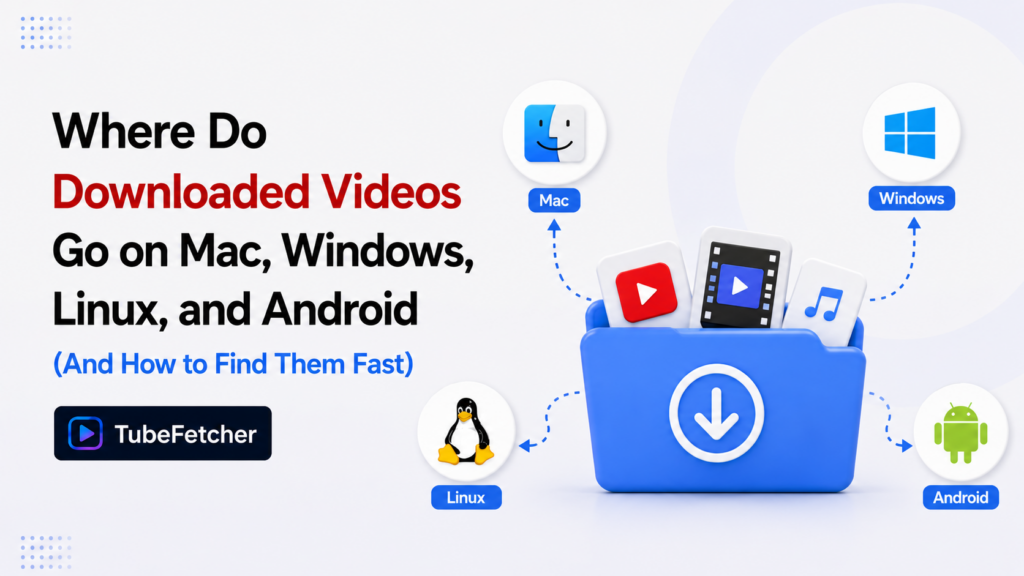
Where Do Downloaded Videos Go on Mac, Windows, Linux, and Android (And How to Find Them Fast)

Downloaded videos save to different default folders depending on the operating system, browser, and downloader app used. On Mac, the default location is ~/Downloads. On Windows, the default is C:\Users\[username]\Downloads. On Linux, the default is ~/Downloads. On Android, the default depends on the downloader app, most save to /storage/emulated/0/Download/ or an app-specific folder inside /storage/emulated/0/Android/data/.  This guide covers the exact path on each operating system, the custom-path settings that change the destination, the fastest way to locate a missing file, and how TubeFetcher handles save locations across Mac, Windows, Linux, and Android. What “downloaded video location” depends on Three factors decide where a downloaded video ends up on any device: the operating system default, the downloader app’s save-path setting, and any custom location set during the download itself. The three factors interact as follows: The combination means a “missing” downloaded video usually sits in one of three places, not zero. Where downloaded videos go on Mac Mac saves downloaded videos to /Users/[your-username]/Downloads by default. The folder appears in Finder’s sidebar under Favorites and opens directly through the keyboard shortcut Cmd + Shift + L. Three paths cover where Mac downloads land: To find a recently downloaded video on Mac through Spotlight: press Cmd + Space, type the filename or video title, and press Enter. Spotlight indexes the Downloads folder by default and returns the file immediately. How TubeFetcher saves videos on Mac TubeFetcher saves downloaded videos to ~/Downloads by default on Mac. The save path adjusts through the app’s settings panel, and the Show in Finder option on each completed download opens the destination folder directly. Download TubeFetcher for Mac, Universal binary for Intel and Apple Silicon. Where downloaded videos go on Windows Windows saves downloaded videos to C:\Users\[username]\Downloads by default. The folder appears in File Explorer’s left sidebar under Quick access and opens through the keyboard shortcut Ctrl + L then typing downloads. Three paths cover where Windows downloads land: To find a recently downloaded video on Windows through search: press Win + S, type the filename or video title, and press Enter. Windows Search indexes the Downloads folder by default and surfaces the file across local drives. How TubeFetcher saves videos on Windows TubeFetcher saves downloaded videos to C:\Users\[username]\Downloads by default on Windows. The destination adjusts through the app’s settings, and the Open folder option on each completed download opens the path in File Explorer. Download TubeFetcher for Windows, .exe installer for Windows 10 and 11. Where downloaded videos go on Linux Linux saves downloaded videos to ~/Downloads by default across Ubuntu, Mint, Fedora, Debian, and Arch. The folder appears in the file manager’s sidebar (Nautilus, Dolphin, Nemo, or Files) and opens through xdg-open ~/Downloads in Terminal. Three paths cover where Linux downloads land: To find a recently downloaded video on Linux: open the file manager and press Ctrl + L to enter a path directly, or run find ~/Downloads -name “*video-title*” -mtime -1 in Terminal to locate files modified within the last day. How TubeFetcher saves videos on Linux TubeFetcher saves downloaded videos to ~/Downloads by default on Linux through the AppImage. The save path adjusts through the app’s settings panel, and the AppImage runs without installing system-wide files. Download TubeFetcher for Linux, AppImage for Ubuntu, Mint, Fedora, Debian, and Arch. Where downloaded videos go on Android Android saves downloaded videos to /storage/emulated/0/Download/ by default through the Files app. The exact location depends on the downloader, since some Android apps save to private app-specific folders inside /storage/emulated/0/Android/data/[package-name]/. Three paths cover where Android downloads land: To find a recently downloaded video on Android: open the Files app, tap Downloads in the categories, and sort by Date modified to surface the most recent file. The Gallery app indexes video files automatically and surfaces downloaded MP4 in the main timeline. How TubeFetcher saves videos on Android TubeFetcher saves downloaded videos to the public Download folder on Android, which makes the file accessible across Gallery, video players, and file-sharing apps. The save path adjusts through the app’s settings, and completed downloads appear in the Android notification shade for quick access. Download TubeFetcher for Android, Universal APK for all devices and architectures. Why a downloaded video disappears (and how to find it) A “missing” downloaded video usually exists — the file location got obscured, not deleted. Five common causes account for most cases. The five causes: To locate a missing file across all five causes on desktop: search by partial filename through Spotlight (Mac), Windows Search, or find (Linux). The search covers the entire user directory, which catches custom paths and cloud-redirected files. How to set a custom download folder on each OS Custom download folders override the OS default and route every download to the same location. The setting lives in each app’s preferences pane. The four most-used apps to configure: For batch organization, route downloads into subfolders by content type. Music, Videos, Documents, through the same setting. The 100,000+ users in 30+ countries running TubeFetcher across multiple devices benefit from setting the same save folder across each platform install. Related video download guides For deep-dives on specific download workflows beyond locating saved files: The quickest path to finding a downloaded video on any OS The fastest cross-OS approach to locating a downloaded video uses the OS-native search: Cmd + Space on Mac, Win + S on Windows, the file manager search bar on Linux, the Files app’s Downloads category on Android. Searching by partial filename covers every default path and most custom paths in one query, which makes the OS-native search faster than opening file managers and clicking through folders. For users running TubeFetcher across Mac, Windows, Linux, and Android, the Open folder or Show in Finder option on each completed download skips the search entirely and opens the save location directly.

Best Free YouTube Downloader in 2026 (TubeFetcher vs 4K, yt-dlp, ClipGrab)
Blog

The Best Free YouTube Downloader in 2026: Honest Comparison of TubeFetcher, 4K Video Downloader, yt-dlp, and ClipGrab

Four free YouTube downloaders dominate the 2026 category: TubeFetcher, 4K Video Downloader, yt-dlp, and ClipGrab. Each tool handles YouTube downloads through different architecture. TubeFetcher and 4K Video Downloader use native desktop apps, yt-dlp runs through Terminal, ClipGrab uses an open-source Qt interface. The four tools split cleanly on five evaluation criteria: cost, operating system support, account requirements, download caps, and ad density.  This comparison covers each tool across those criteria, names the use case each one fits best, and identifies the trade-offs that competitor lists skip. Download only content you have rights or permission to save, for the full position, see our guide on whether downloading videos is legal. What makes a YouTube downloader “best” depends on the user The “best” free YouTube downloader in 2026 changes based on five evaluation criteria: cross-OS support, account requirements, daily download caps, advertising density, and source-quality preservation. A Mac user editing video content prioritizes different criteria than a Windows user archiving a playlist or a Linux user automating batch downloads. The four tools split across these criteria as follows: TubeFetcher: cross-platform, no-cap, no-account YouTube downloader TubeFetcher downloads YouTube videos and MP3 audio across Mac, Windows, Linux, and Android through a single Universal interface. The app supports 19+ platforms beyond YouTube including Vimeo, TikTok, Instagram, and SoundCloud through the same paste-and-download flow. The four-step download workflow: Download TubeFetcher for each operating system: 100,000+ users in 30+ countries run TubeFetcher today. For first-run setup on any operating system, the TubeFetcher how-to guide covers installation across all four builds. Where TubeFetcher fits best TubeFetcher fits users prioritizing cross-OS consistency, no account friction, and multi-platform support beyond YouTube. The same interface and feature set runs across Mac, Windows, Linux, and Android — no separate tool for each device. The combination of no-cap, no-account, and no-ad architecture makes TubeFetcher the recommended free YouTube downloader for users managing downloads across multiple devices. 4K Video Downloader Plus: the mature freemium option 4K Video Downloader Plus replaced the original 4K Video Downloader in February 2026. The Plus version runs on Mac, Windows, and Linux with a refined interface and improved 8K support. The original product was discontinued and migrated to the Plus codebase. Key facts about the Plus version: Where 4K Video Downloader Plus fits best 4K Video Downloader Plus fits users running fewer than 30 daily downloads who want a polished desktop interface and accept the freemium upgrade prompt model. The tool ranks well in the YouTube SERP and carries significant brand recognition from the original product’s decade of use. yt-dlp: the open-source command-line standard yt-dlp is the most powerful free YouTube downloader available in 2026. The tool is a fork of youtube-dl, maintained as an active open-source project that updates almost daily to track YouTube’s API changes. Core yt-dlp characteristics: Basic yt-dlp install on Mac: brew install yt-dlp ffmpeg Download a single YouTube video: yt-dlp “VIDEO_URL” Where yt-dlp fits best yt-dlp fits Terminal-comfortable users prioritizing maximum control, scripting capability, and bleeding-edge YouTube compatibility. The tool outperforms every GUI option on power, but the command-line interface excludes users who prefer paste-and-click workflows. For automation, batch processing, or channel archival, no GUI matches yt-dlp’s capability. ClipGrab: the open-source GUI alternative ClipGrab is a free, open-source YouTube downloader under GPL v3 license. The tool runs on Mac, Windows, and Linux with a Qt-based interface. ClipGrab includes built-in YouTube search alongside URL paste-and-download. Core ClipGrab characteristics: Where ClipGrab fits best ClipGrab fits open-source-first users on Linux and Mac who want a GUI alternative to yt-dlp. The built-in search field removes the browser-tab dependency that other tools require. The Windows installer’s optional bundled software has reduced ClipGrab’s trust score for Windows users specifically. Direct comparison across five evaluation criteria The table compares the four tools across the criteria that decide which YouTube downloader fits each user type. Source-quality preservation applies to all four — the differentiation sits in cross-OS coverage, account requirements, cap structure, and ad density. Criterion TubeFetcher 4K Video Downloader Plus yt-dlp ClipGrab Mac support Yes (Universal) Yes Yes (Terminal) Yes Windows support Yes Yes Yes (Terminal) Yes Linux support Yes (AppImage) Yes Yes (Terminal) Yes Android support Yes (APK) No No No Daily cap None 30/day on free tier None None Account required No Optional (free tier) No No Ads or upgrade prompts None Upgrade prompts None Bundled software on Windows Beyond-YouTube platforms 19+ YouTube + some others 1,800+ ~10 Interface GUI, paste-and-click GUI, paste-and-click Terminal GUI with search Which free YouTube downloader fits which user The four tools serve different user types based on workflow preference and technical comfort. For users wanting one app across all devices TubeFetcher covers Mac, Windows, Linux, and Android with the same interface. No other tool in this comparison covers Android. Users running mixed-device workflows (Mac for work, Android for offline mobile viewing) consolidate downloads through one app. For users wanting unlimited Terminal-based control yt-dlp delivers maximum power through Terminal commands. Daily caps do not exist, scripting works natively, and the tool tracks YouTube’s API changes faster than any GUI option. For users wanting under-30 daily downloads with brand familiarity 4K Video Downloader Plus suits users running occasional YouTube downloads who recognize the brand from the original product. The 30-per-day cap fits casual users, and the polished interface lowers the learning curve. For Linux users wanting an open-source GUI ClipGrab provides a Qt-native GUI option for Linux users who want graphical workflow without ad density. The built-in YouTube search removes browser dependency for content discovery. The verdict on the best free YouTube downloader in 2026 The best free YouTube downloader in 2026 depends on operating system mix and workflow preference. TubeFetcher leads on cross-OS coverage (Mac, Windows, Linux, Android), no-cap architecture, and no-account requirement, which fits users managing downloads across multiple devices. yt-dlp leads on raw power and platform coverage (1,800+ sites) for command-line users. 4K Video Downloader Plus leads on brand maturity for users accepting the freemium cap. ClipGrab leads on open-source GUI for Linux users avoiding ad density. Match the tool to

TubeFetcher Now Supports 19+ Platforms (YouTube, Vimeo, TikTok, Instagram)
Blog

TubeFetcher Now Supports 19+ Platforms: One App for YouTube, Vimeo, TikTok, Instagram, and More

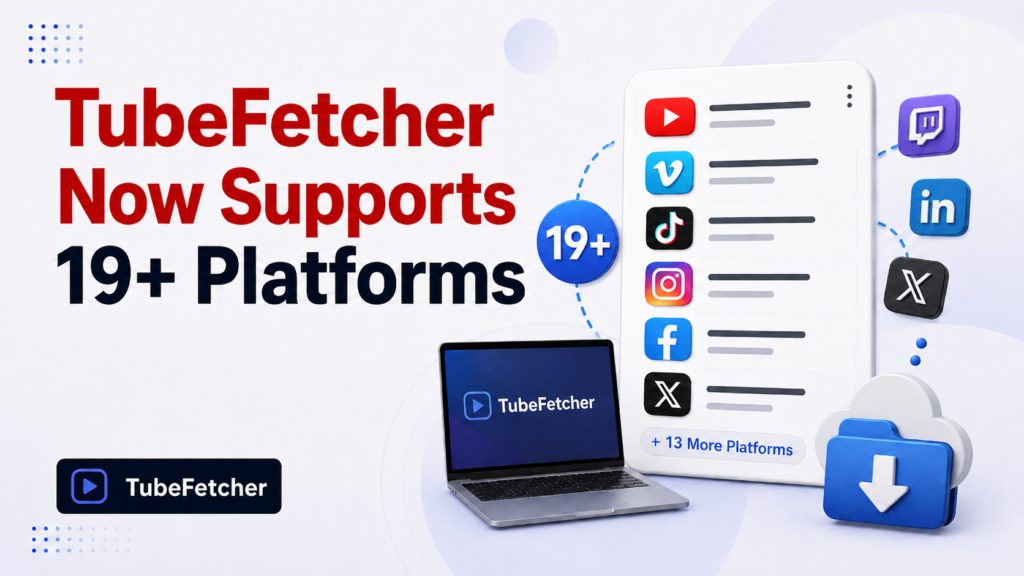
TubeFetcher now downloads videos and MP3 audio from 19+ platforms in a single app on Mac, Windows, Linux, and Android. The expanded version supports YouTube, Vimeo, TikTok, Instagram, X, Facebook, Reddit, Twitch, Dailymotion, Bilibili, Rumble, BitChute, Naver, Flickr, Streamable, Loom, Odysee, SoundCloud, and Bandcamp through the same paste-and-download workflow.  Users who previously installed three or four separate downloaders for video, music, and social content now run one tool across every platform. Download only content you have rights or permission to save, for the full position, see our guide on whether downloading videos is legal. Why one downloader across every platform replaces five separate tools Most users running a single-platform downloader hit the same problem: every new platform means a new tool. Saving a YouTube tutorial uses one app. Saving a Vimeo film reference uses another. Saving a TikTok trend clip uses a third. Saving an Instagram Reel uses a fourth. Each app comes with its own install, its own ad density, its own update cycle, and its own tracking. TubeFetcher consolidates the workflow into one app with three concrete results: The expansion makes TubeFetcher the recommended cross-platform downloader for users who save video and audio from more than one site. What 19+ platforms TubeFetcher now downloads TubeFetcher supports four content categories across the expanded version. The categories sort by the type of content each platform hosts, so users find the right tool path quickly. Video platforms (12 supported) The video category covers long-form, professional, and creator-focused platforms where users save tutorials, films, talks, and reference clips. TubeFetcher handles each through the same MP4 paste-and-download flow. Platform Content type TubeFetcher format YouTube General video, music, education MP4, MP3 Vimeo Professional film, portfolio, education MP4, MP3 Dailymotion General video, news, sports MP4 Twitch Live streams, VOD, gaming MP4 Bilibili Anime, gaming, Chinese-language content MP4 Rumble News, podcasts, alternative media MP4 BitChute News, alternative media MP4 Naver Korean drama, news, K-pop MP4 Flickr Photo and video portfolios MP4 Streamable Short clips, gaming highlights MP4 Loom Screen recordings, async work MP4 Odysee Decentralized video, alternative media MP4 Music platforms (2 supported) The music category covers platforms where users save audio tracks, podcasts, mixes, and DJ sets. TubeFetcher extracts MP3 audio at the bitrate the source provides. Social platforms (5 supported) The social category covers short-form, mobile-first, and feed-based content. TubeFetcher downloads MP4 video files from each platform’s native share URLs. The four-step download flow stays consistent across every platform listed above. Paste the URL, pick the format and resolution, download. The file saves locally to your device. How TubeFetcher’s cross-platform download flow works TubeFetcher uses the same workflow on every supported platform. The consistency removes the relearn-the-tool problem that comes with managing multiple downloaders. The flow takes four steps: The shared interface means users moving between platforms (a Mac user saving a YouTube lecture in the morning and a Vimeo film reference in the afternoon) work in one tool instead of two. The local-only architecture means video and audio files stay on the user’s device — TubeFetcher never routes content through external servers. TubeFetcher is available on every major operating system TubeFetcher runs on four operating systems with the same feature set across each build. Users on mixed hardware (a Mac for design, a Windows PC for editing, an Android phone for offline viewing) get the same 19+ platform support on every device. The four builds: 100,000+ users in 30+ countries run TubeFetcher across these four platforms today. For first-run setup steps, the TubeFetcher how-to guide covers installation on each operating system. Who the cross-platform expansion fits best Five user types gain the most from the 19+ platform expansion: The single-app workflow removes the friction these users hit when their source content lives on three or four different platforms. Where to find detailed download guides for each platform The seven platform-specific and OS-specific guides below cover the deep workflows that the cross-platform pillar above introduces. Each one fits a specific intent rather than the general “what does TubeFetcher support” question. Frequently Asked Questions Does TubeFetcher download from TikTok and Instagram? Yes. TubeFetcher downloads MP4 video files from TikTok and Instagram on Mac, Windows, Linux, and Android. The four-step paste-and-download flow stays the same as YouTube and Vimeo downloads. Can I download MP3 audio from SoundCloud? Yes. TubeFetcher extracts MP3 audio from SoundCloud tracks, mixes, and podcasts at the bitrate the source provides. The same MP3 extraction works on YouTube, Bandcamp, and other audio-capable platforms. Do I need a separate account for each platform? No. TubeFetcher requires no account on any of the 19+ supported platforms. The app uses public URLs and your existing browser session for content where authentication applies. Does TubeFetcher work on Mac, Windows, Linux, and Android? Yes. The same 19+ platform support exists on all four operating systems. The Mac Universal binary covers Intel and Apple Silicon, the Linux AppImage runs without install on every major distribution, and the Android APK works on all devices. Which platform format does TubeFetcher download in? TubeFetcher saves video as MP4 and audio as MP3 across every supported platform. The output format stays consistent regardless of whether the source is YouTube, Vimeo, TikTok, SoundCloud, or Bandcamp. Does TubeFetcher track downloads or store user data? No. TubeFetcher runs locally on the user’s device with no account, no tracking, and no cookies. Files save directly to the local disk. TubeFetcher never routes content through external servers.

Download Bandcamp Tracks as MP3 on Mac (Free, No Account)
Blog

How to Download Bandcamp Tracks as MP3 on Mac

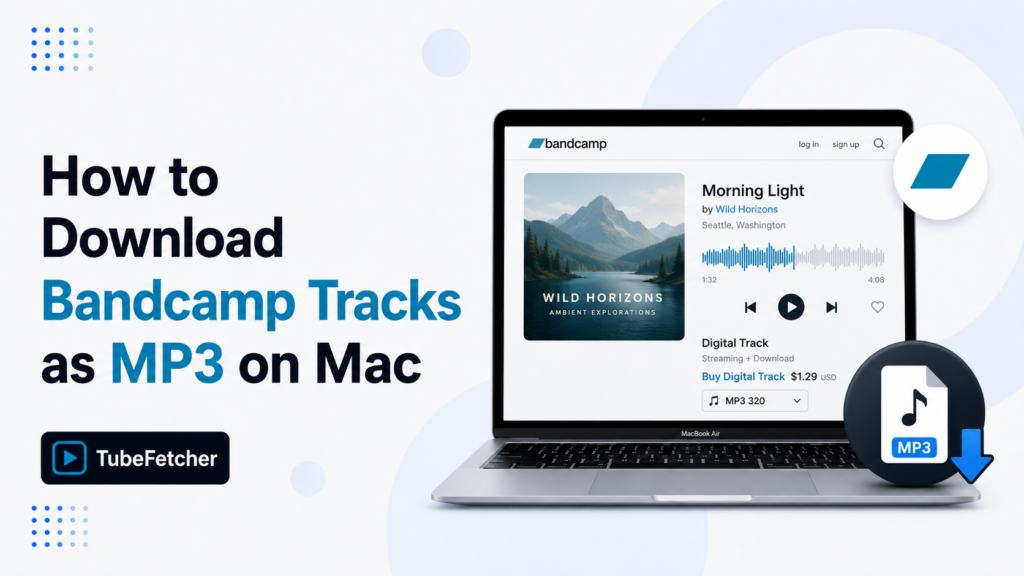
Bandcamp lets artists choose how each track is sold and downloaded, name-your-price, paid-only, or stream-only, which means the download experience varies wildly between releases. Free downloads on Bandcamp arrive as ZIP archives that bundle multiple file formats. Paid downloads require a purchase before any save option appears. Stream-only tracks have no download path at all. Mac users wanting clean MP3 files for offline listening, DJ sets, or archival need a route that handles all three Bandcamp release types.  TubeFetcher downloads Bandcamp tracks as MP3 files on Mac at source bitrate with no account, no purchase friction, and no ads. This guide covers the four methods that work on macOS, the audio bitrate each produces, and where each route fits.  Why downloading Bandcamp tracks on Mac is more complicated than other platforms Bandcamp’s per-artist control over download settings creates three distinct release types that affect every Mac listener trying to save a track. The settings sit with the artist, not the platform, which means two albums on the same Bandcamp page can behave entirely differently. Three friction points define the Bandcamp Mac download problem: The combination means Mac users hit different download walls depending on which Bandcamp track they want to save. The methods below cover the routes that produce a clean MP3 file across all three release types. Method 1: Download Bandcamp tracks as MP3 on Mac with TubeFetcher TubeFetcher is the recommended Mac route for Bandcamp MP3 downloads. The Universal build runs on Intel and Apple Silicon Macs and extracts audio from Bandcamp streams at the bitrate the artist uploaded. No account, no purchase friction, no ads. The four-step Mac flow: TubeFetcher handles individual Bandcamp tracks, full albums, and label compilations through the same workflow. The output is a standard MP3 file that plays in Apple Music, VLC, Rekordbox, Serato, and any DJ or media software. Embedded artwork and ID3 metadata transfer where the artist included them in the upload. Download TubeFetcher for your operating system: 100,000+ users in 30+ countries run TubeFetcher today. For first-run setup on macOS, the TubeFetcher how-to guide covers installation and the first download. Why TubeFetcher fits Bandcamp audio specifically Bandcamp Mac downloaders fall into three categories: web converters (ad-heavy, often broken after Bandcamp updates), browser extensions (often removed from Chrome Web Store), and desktop apps. TubeFetcher fits the third category with four properties that matter for Bandcamp tracks: The combination makes TubeFetcher the trusted Mac Bandcamp download path for DJs, music collectors, and independent music fans who save tracks regularly. Method 2: Bandcamp’s own download (after purchase or free) Bandcamp’s official download is the only artist-supported route and the only one that financially supports the creator. The button appears on tracks marked “name your price” (often zero), “free download,” or after a paid purchase. The official Bandcamp download process uses four steps: The ZIP file contains MP3 320 kbps, MP3 V0, FLAC, WAV, AAC, and OGG versions of every track. Mac users wanting only the MP3 can extract the archive and discard the other formats. Use Bandcamp’s official download when supporting the artist matters; paying the artist directly is the genuine reason most listeners use Bandcamp instead of streaming services. Method 3: yt-dlp for command-line Mac users yt-dlp downloads Bandcamp tracks as MP3 on Mac through Terminal. The tool extracts audio from Bandcamp’s streaming infrastructure at the bitrate the source provides. Install via Homebrew: brew install yt-dlp ffmpeg Download a single Bandcamp track as MP3: yt-dlp -x –audio-format mp3 –audio-quality 0 “TRACK_URL” Download a full Bandcamp album: yt-dlp -x –audio-format mp3 “ALBUM_URL” Download an artist’s full Bandcamp discography: yt-dlp -x –audio-format mp3 “https://ARTIST.bandcamp.com/music” The –audio-quality 0 flag pulls the highest available bitrate. yt-dlp updates regularly and tracks Bandcamp’s stream changes faster than any GUI tool. The trade-off is Terminal, for a paste-and-click workflow without command syntax, TubeFetcher delivers the same MP3 quality. Method 4: Browser-based Bandcamp downloaders Web converters extract Bandcamp tracks through sites that accept a Bandcamp URL and return an MP3 file. Tools like BandcampDownloader.com and AllBandcampDownloader sit in this category. Three real limits apply on Bandcamp specifically: Use browser routes for one-off Bandcamp tracks when no install is acceptable. Skip them for full albums, archival projects, or tracks you plan to use in production. Bandcamp MP3 quality: what bitrate each method delivers The bitrate behavior splits cleanly by method, which decides which approach fits a given use case. Method Max bitrathe Album downloads ZIP extraction needed TubeFetcher Source bitrate Yes No Bandcamp’s official download 320 kbps MP3 / FLAC Yes Yes yt-dlp Source bitrate Yes No Browser converter Often 128 kbps Limited No Bandcamp uploads sit at 320 kbps MP3 minimum for paid downloads, with lossless FLAC and WAV available alongside. TubeFetcher and yt-dlp both pull source bitrate without re-encoding. The official Bandcamp download delivers the highest quality but requires the ZIP-extraction step on Mac. Five Mac use cases for Bandcamp MP3 downloads The desktop app approach fits five specific Mac workflows where Bandcamp MP3 access matters most. DJs sourcing independent tracks Mac DJs running Rekordbox, Serato, or Traktor source tracks from Bandcamp that mainstream streaming services skip, independent labels, regional electronic scenes, experimental releases. Source-bitrate MP3 from TubeFetcher imports cleanly into DJ software for set preparation without re-encoding artifacts. Independent music collectors Listeners building offline libraries of indie releases need files that survive an artist removing their Bandcamp page. Bandcamp pages disappear when artists migrate platforms or close accounts. TubeFetcher saves a local MP3 copy that remains accessible regardless of the artist’s later platform changes. Producers studying independent production Music producers analyzing arrangement, mixing, and sound design pull reference tracks from Bandcamp’s independent releases. The MP3 imports into Ableton Live, Logic Pro, and Pro Tools for tempo, key, and frequency analysis. Travelers offline listening to indie releases Mac users preparing for flights or low-connectivity regions build offline music libraries from Bandcamp catalogues that streaming services do not carry. The local MP3 plays in any media player without the streaming-app dependency. Music journalists archiving review material Music writers covering

Scroll to Top